Published Wednesday, March 4, 2026
By Heather Fogarty
Packaging has come a long way from being just a protective layer around a product. Today, it plays a critical role in
branding, sustainability, and the overall customer experience — especially during the unboxing moment. Across the
packaging industry, innovation is increasingly tied to reducing plastic, lowering carbon impact, and designing for a
more circular future.
For small businesses, packaging innovation isn’t about expensive technology, structural engineers, or massive
production runs. It’s about making smarter choices that elevate your brand, reduce waste, and create memorable
experiences for customers.
That’s where DIYpack comes in — helping brands create innovative corrugated packaging without overcomplicating the
process or breaking the budget.
Why Packaging Innovation Matters for Small
Businesses
You don’t need to be a global brand to benefit from innovative packaging. In fact, small businesses often have
more flexibility to adapt, experiment, and stand out.
Your Packaging Is Part of Your Product
For ecommerce and direct-to-consumer brands, unboxing is part of the brand experience itself.
Thoughtful packaging:
- Shapes first impressions
- Builds trust and professionalism
- Makes your brand feel intentional and polished
A well-designed box can turn a one-time purchase into a repeat customer — or even a social share. It can also
extend the life of your packaging through reuse, especially when the box is durable enough to keep.
Consumers Expect More
Today’s customers are paying attention. They notice:
- Excess waste (i.e. non-ecofriendly fillers)
- Overly large boxes
- Materials that don’t align with sustainability values (i.e. plastic mailers, virgin plastic fillers, or
hard-to-separate mixed materials)
Innovative corrugated packaging gives small brands a way to differentiate — not just through visuals, but through
responsibility and functionality. In many cases, switching away from unnecessary plastic components helps reduce
pollution and keeps more material out of landfills.
What Does “Innovative Packaging” Actually Mean?
The term packaging innovation can sound intimidating, but it doesn’t have to be.
It’s Not Just About High-Tech Solutions
Innovation doesn’t mean robotics or smart sensors (though it can). For most small businesses, it simply means:
- Using better, more sustainable materials
- Choosing smarter box formats
- Using right-sized boxes
- Making design decisions that reduce costs or improve usability
Small changes can have a big impact.
It’s About Solving Problems
Innovative packaging focuses on real-world challenges, such as:
- Reducing storage space
- Lowering shipping costs
- Simplifying assembly and fulfillment
- Having a lower impact on the planet
With low minimum order quantities and fast turnaround, DIYpack helps brands stay agile and adapt packaging as
their business evolves — which matters when you’re scaling and need packaging that can keep up with demand
shifts.
5 Innovative Packaging Trends Small Brands Can Actually
Use
You don’t need a massive budget to adopt modern packaging solutions. These trends are practical, accessible, and
proven.
1. Sustainable Materials That Don’t Sacrifice Style
Eco-friendly packaging innovation is no longer optional — it’s expected.
Popular options include:
- Recyclable corrugated boxes
- Post-consumer recycled (PCR) content
- Water-based inks
DIYpack uses corrugated materials made with up to 99% recycled content that are 100% curbside recyclable, helping
brands reduce their environmental impact without compromising quality or appearance. All of our material options
— kraft, white, and premium white — share the same sustainable foundation, making it easy to create eco-friendly
packaging that still looks polished and professional.
For brands exploring broader industry materials, you’ll also hear about compostable and biodegradable options,
plant-based films, and even bioplastics as an alternative to conventional plastic. These can be useful in
specific applications (especially certain food packaging needs), but they should be chosen carefully based on
performance, local disposal access, and product requirements.
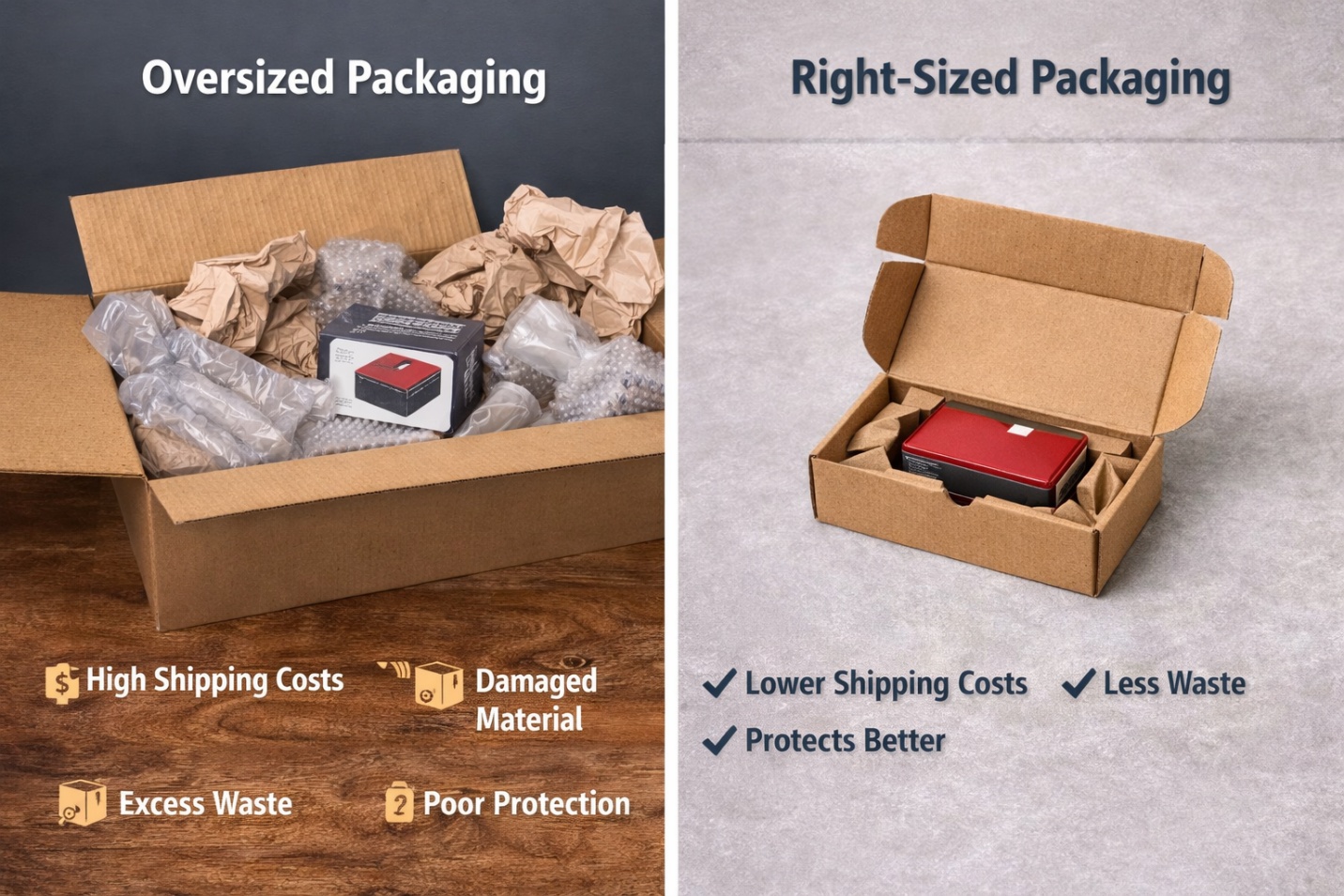
2. Right-Sized Packaging to Cut Waste and Save Money
Oversized boxes lead to:
- Excess void fill
- Higher dimensional (DIM) shipping fees
- More packaging waste for customers
- Increased risk of product damage
Right-sized packaging uses boxes made to fit your product — nothing more, nothing less. With DIYpack’s fast
digital printing and precision cutting, it’s easy to create packaging that fits just right while staying
efficient and cost-effective.
Customers notice when packaging doesn’t match the product inside — and poor fit can quickly turn into a poor
experience. Packaging that’s too large (or not protective enough) can lead to damaged products, frustration, and
lower customer retention. Choosing the right size helps protect your product, reduce waste, and leave a better
impression from the moment the box is opened.
Right-sizing also helps with scaling: less wasted space means lower transportation costs, better logistics
efficiency, and fewer materials used per shipment.
3. Multipurpose Designs
Innovative packaging doesn’t just protect a product — it works harder at every stage of the customer journey.
Multipurpose packaging is designed to serve more than one function, helping brands save money while creating a
better unboxing experience. Common examples include:
- Reusable boxes customers keep for storage or future shipping
- Gift-ready packaging that looks polished without the need for extra wrapping
- Boxes that work for both shipping and retail display, reducing the need for multiple packaging components
By keeping these ideas in mind and combining functions into a single design, brands can reduce packaging
materials, simplify fulfillment, and cut overall costs. At the same time, customers perceive greater value when
packaging feels intentional, attractive, and reusable — not disposable.
When a box looks good enough to keep or reuse, your brand stays in front of customers longer. That added utility
helps reinforce brand quality, encourages repeat purchases, and turns everyday packaging into part of the
product experience. In a circular mindset, designs that can be reused or recycled more easily help connect your
brand to customer values.
4. Digital Printing
Packaging innovation is also about changing how packaging is created and produced. Digital printing does exactly
that.
With traditional printing, brands often face high setup costs, long lead times, and large minimum order
quantities. That means committing to one design for thousands of boxes, even if the product, branding, or
messaging changes.
Digital printing is innovative because it:
- Removes traditional barriers (large minimums, high setup costs, long lead times)
- Empowers small businesses to experiment like big brands
- Enables faster iteration, testing, and customization (seasonal or promotional packaging)
- Reduces waste by producing only what’s needed
- Easy design updates
Because digital printing allows for fast changes and small batch production, brands can test new designs, respond
to customer feedback, and launch special packaging moments without overproducing or sitting on unused inventory.
With DIYpack, this flexibility means businesses can move faster — experimenting with new ideas, running limited
campaigns, or refreshing packaging as their brand evolves — all while staying efficient, affordable, and
sustainable.
5. Using the Box Itself as a Communication Tool
Packaging innovation doesn’t have to be complex or high-tech. Sometimes it’s simply about using the space you
already have — the inside and outside of the box — more intentionally.
Instead of adding separate printed inserts, brands can print key messaging directly onto the box, including:
- QR codes linking to product tutorials, setup guides, or how-to videos
- Brand stories or messaging that reinforce values and personality
- Care instructions, usage tips, or reorder information
- Promotions or social media calls-to-action
By printing this information directly on the box, brands can eliminate the need for extra materials like flyers
or instruction cards. This reduces costs, speeds up packing, and minimizes waste — all while keeping the
unboxing experience clean and intentional.
How DIYpack Makes Innovative Packaging Easy
DIYpack was built to give small businesses access to corrugated packaging solutions typically reserved for larger
brands.
With DIYpack, you get:
- No minimum order quantities — order only what you need
- Fast, flexible custom printing
- Sustainable corrugated materials and water-based inks
- Local pickup or fast nationwide delivery
- Digitally printed and real customer support
Innovation shouldn’t be complicated — and with DIYpack, it isn’t.
Conclusion: Innovation Isn’t Just for Big Brands
Packaging innovation isn’t about doing everything at once. Even one small improvement — a better material, a
right-sized box, or a thoughtful design update — can significantly improve the customer experience while
reducing costs and waste.
👉 Explore custom packaging solutions at DIYpack.com — where
innovation meets affordability.
FAQs
What are innovative packaging solutions for small businesses?
Innovative packaging solutions are practical upgrades like right-sized boxes, better materials, digital printing
for small batches, and designs that reduce waste while improving unboxing.
Is corrugated packaging considered sustainable?
Often, yes — especially when it’s made from high recycled content and is fully recyclable through curbside
programs, like DIYpack’s corrugated options.
What’s the difference between biodegradable and compostable packaging?
Biodegradable materials break down over time, while compostable materials are designed to break down under
specific composting conditions. Availability of composting access matters when choosing compostable packaging.
How can packaging reduce costs as a business is scaling?
Right-sizing reduces shipping and filler costs, digital printing avoids large minimums, and multipurpose or
reusable packaging can reduce the need for extra components.
When does plastic-free packaging make sense?
Plastic-free packaging can make sense when paper-based packaging or fiber-based packaging options meet your
performance needs (protection, durability, moisture resistance) without adding unnecessary materials.
Do I need special packaging for food products?
Many food products require added protection for food safety and shelf-life, sometimes using a coating or liner.
The right approach depends on the product and distribution.
Can packaging help reduce food waste?
Yes. When packaging improves protection and shelf-life, it can help reduce food waste by keeping products fresher
longer during transportation and storage.
About the Author