Published Thursday, January 29, 2026
By Heather Fogarty
Shipping fragile items can feel intimidating — especially when your products are glass, ceramic, or easily damaged.
Whether you’re sending candles, skincare, home goods, or gift sets, the right packing strategy protects your products
and your brand reputation.
This guide walks through how to pack and ship fragile items safely, using practical, small-business-friendly
techniques that reduce damage, returns, and customer complaints.
Why Proper Fragile Packaging Matters
Fragile items are exposed to:
- Drops and vibration during transit
- Temperature changes
- Heavy stacking and handling
Without proper packaging, even a sturdy box won’t prevent breakage. Smart packing protects your products and shows
customers you care about quality and presentation.
1. Choose the Right Box for Fragile Shipping
Your box is your first line of defense.
For fragile items, corrugated mailer boxes are a strong
choice because they:
- Offer rigid structure
- Reduce crushing
- Keep items contained and secure
- Create a professional unboxing experience
💡 Pro tip: Always choose a right-sized box. Oversized boxes allow items to move and increase the
risk of damage.
2. Wrap Each Fragile Item Individually
Never place fragile items directly into a box without protection.
Common wrapping options include:
- Tissue paper for lightweight items
- Bubble wrap for glass or ceramics
- Protective sleeves for candles or bottles
- Paper padding for eco-friendly packing
Each item should be wrapped separately to prevent contact with other products.
3. Fill All Empty Space
With right-sized packages you should not have much empty space although even some empty space inside a box allows
items to shift, which leads to breakage.
Fill gaps for extra protection with:
- Crinkle paper
- Tissue paper
- Kraft paper
- Paper-based void fill
This adds protection and enhances the unboxing experience.
4. Place Heavier Items at the Bottom
Weight distribution matters.
When packing multiple items:
- Place heavier products at the bottom
- Center them in the box
- Surround them with cushioning
- Layer lighter or more delicate items on top
This reduces pressure on fragile items during transit.
If you’re packing multiple products together, this guide may help: packing multiple items in a mailer box.
5. Seal the Box Securely
A well-packed box still needs to stay closed.
Best practices:
- Use strong packing tape
- Seal all seams
- Reinforce heavier packages
A securely sealed box protects both the contents and the presentation when it arrives.
6. Label Fragile Shipments Clearly
While labels don’t guarantee gentle handling, they can help.
Use:
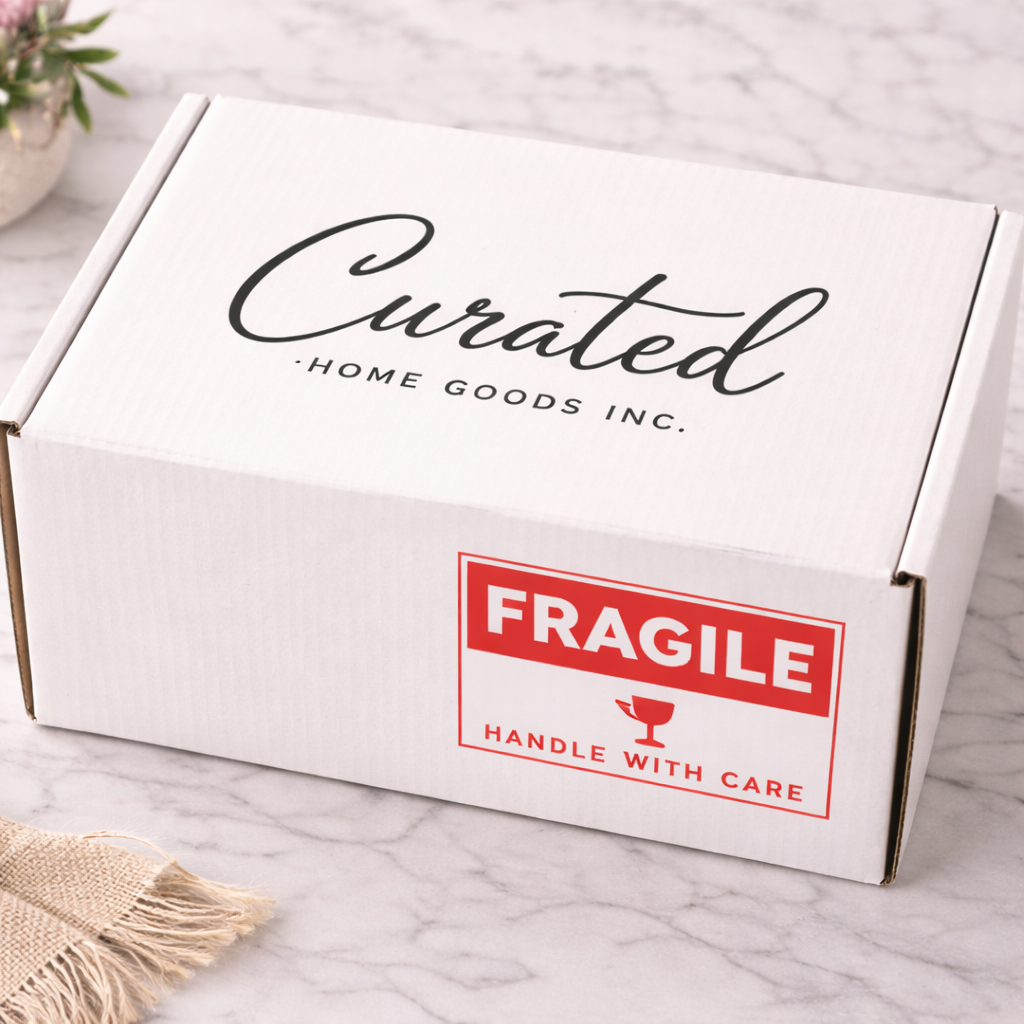
- “Fragile” labels
- “This Side Up” indicators for liquids or candles
Keep labels clean and professional so they don’t distract from your branding.
7. Balance Protection with Presentation
Protective packaging doesn’t have to look plain.
Thoughtful details can include:
- Branded tissue paper
- Branded crinkly paper
- Neat, intentional arrangement
A polished unboxing experience builds trust and encourages repeat purchases.
Common Fragile Items & Packing Focus
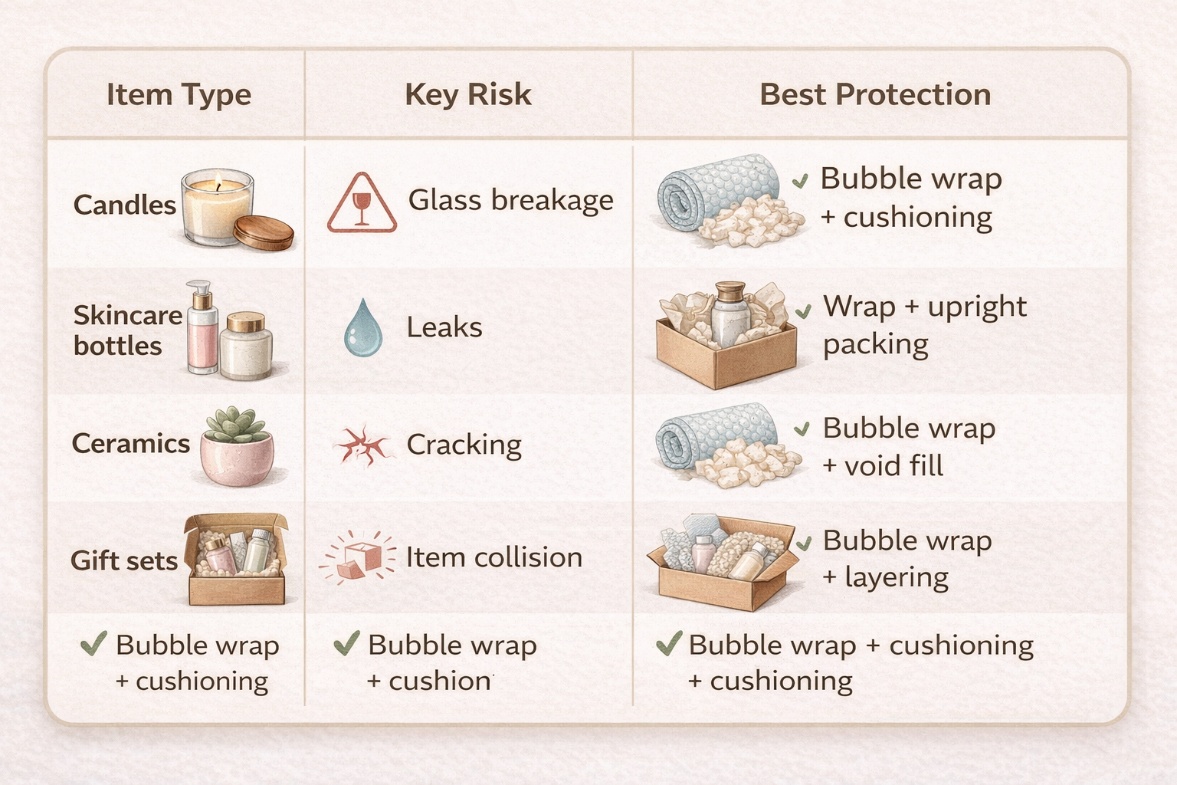
When it comes to shipping fragile items, the right packaging makes all the difference. DIYpack makes it easy to
protect your products with right-sized packaging that minimizes movement, multiple box styles and sizes that support
single- or double-boxing strategies, designed to stand up to real-world transit. Whether you’re sending candles, skincare, ceramics, or curated gift sets, DIYpack gives businesses the
flexibility and durability they need to ship with confidence—without overpacking, overspending, or compromising on
presentation.
Explore box styles and sizes here: DIYpack products.
For more eco-friendly packing ideas, read: how to reduce packaging waste.
About the Author